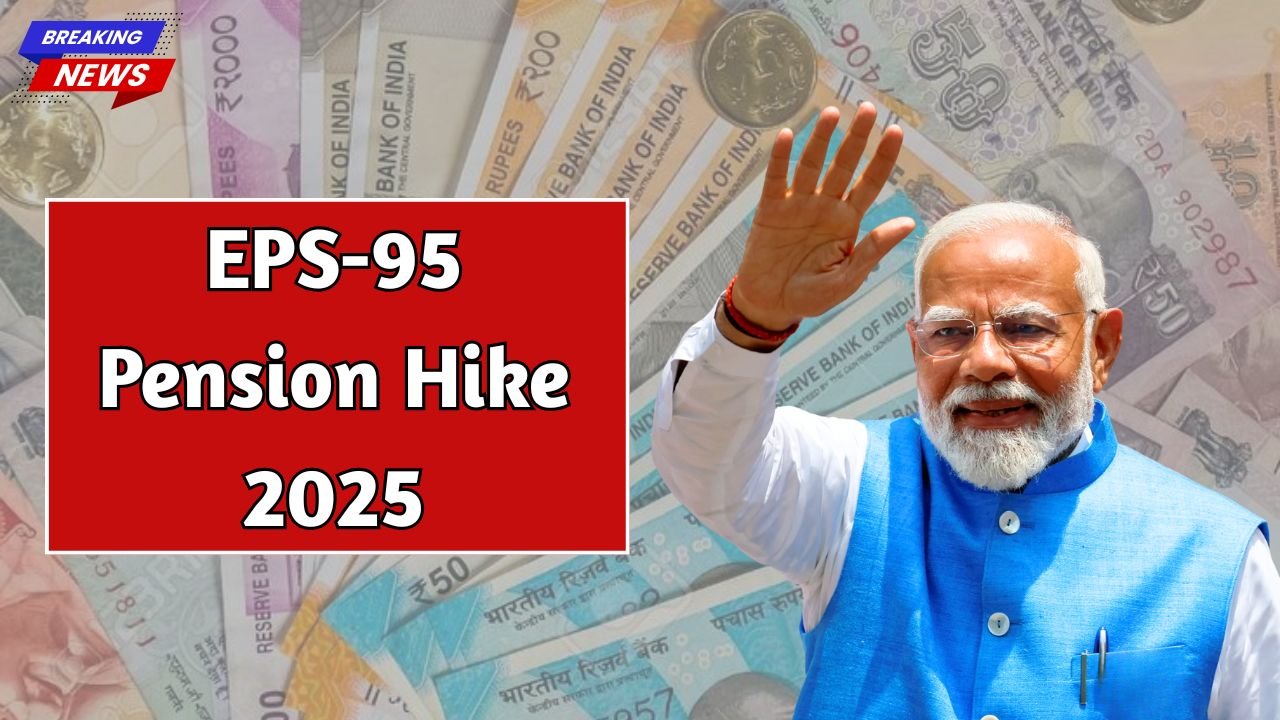
EPS-95 Pension- The Indian government has announced a big rise in the minimum monthly pension under the Employees’ Pension Scheme (EPS-95). From May 2025, pensioners will receive ₹7,500 every month instead of ₹1,000. This is a huge 650% increase. The goal is to help retired employees live better and have a more comfortable life in their old age.
What is EPS-95?
The Employees’ Pension Scheme (EPS-95) started in November 1995. It was launched by the Employees’ Provident Fund Organisation (EPFO). This scheme is made mainly for people working in the private sector in companies that have more than 20 workers.

It helps employees get a steady monthly income after they retire. The pension amount depends on their salary and how many years they have worked. The scheme also offers support for families in case of the employee’s death.
Basic Details of EPS-95
| Feature | Details |
|---|---|
| Scheme Launched | November 1995 |
| Managed By | Employees’ Provident Fund Organisation (EPFO) |
| Employee Coverage | Companies with 20+ employees |
| Contribution | 8.33% of basic salary (up to ₹15,000) |
| Pension Based On | Years of service and average last salary |
| Benefits | Monthly pension, family pension, survivor benefits |
Timeline of the 2025 Pension Hike
This pension hike did not happen overnight. It was the result of long discussions and demands from retirees.

- January 10, 2025: The EPS-95 National Agitation Committee met Finance Minister Nirmala Sitharaman to request an increase in the minimum pension.
- May 2025: The EPFO formally proposed raising the pension to ₹7,500 per month.
- July 24, 2025: The Labour Ministry confirmed ongoing talks about the hike and discussed the challenge of a ₹50,000 crore fund deficit in the EPS account.
This timeline shows how the government and pensioners worked together to reach this important decision.
Eligibility Criteria for the Increased Pension
Not every member automatically gets the increased pension. There are certain rules to qualify for the new ₹7,500 monthly pension.
- Minimum Service: You must have contributed to EPS for at least 10 years.
- Retirement Age: Normal retirement age is 58 years. Early retirement can start from age 50, but the amount will be lower.
- Salary Rule: Pension is calculated based on your actual salary, as per the Supreme Court’s 2014 order.
- Family Pension: After the pensioner’s death, 50% of the pension will go to the spouse or dependent children.
Steps to Claim the Enhanced Pension
If you are eligible, here are the simple steps to get the increased pension under EPS-95.
- Check Eligibility: Make sure you meet the required years of service and age limit.
- Update EPFO Details: Confirm your salary and service history are correctly updated in the EPFO record.
- Submit Application: You can apply online through the EPFO website or offline at your nearest EPFO office.
- Track Pension Payment: After approval, the revised pension will be credited directly to your bank account.
It’s important to keep your EPFO records updated to avoid delays in getting the enhanced pension amount.

Impact of the Pension Increase
The pension increase will bring relief to lakhs of retired employees who have been waiting for this reform.
This hike will help retirees manage daily expenses like food, medicine, and bills with less stress. It also supports families who depend on these pensions for survival.
When pensioners have more money to spend, it boosts local markets and small businesses. The decision also gives senior citizens more dignity and peace in their post-retirement life.
Conclusion
The government’s decision to raise the EPS-95 pension to ₹7,500 per month is a big and positive step. It will improve the lives of retired employees and support their families financially. This move shows the government’s effort to make retirement life easier and more secure for lakhs of pensioners across India.
Disclaimer- This article is for general information only. Pension rules and benefits may change as per official EPFO or government notifications. Always check the latest circulars before making decisions.